Cyrilla: A Stylish Handwritten Font
There I was, staring at a blank brand board, trying to find the right visual voice for a new boutique coffee shop. The client wanted something warm, inviting, and a little bit edgy. I tried a few serif fonts, some modern sans serifs, but nothing quite clicked. Then I opened Cyrilla.
What Is Cyrilla?
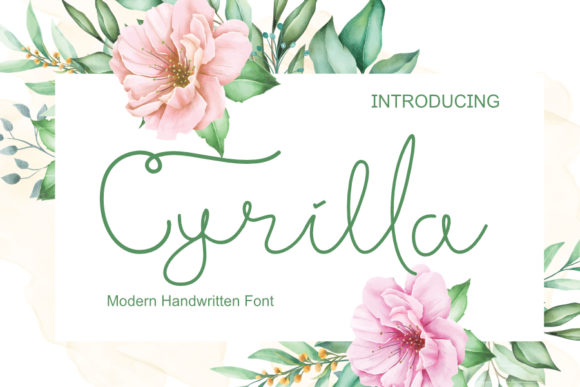
Cyrilla is a handwritten script font that brings a sense of elegance and personality to any design. Its flowing lines and subtle flourishes give it a unique character that feels both timeless and contemporary. It’s not just another script font—it has a distinct rhythm and movement that makes it stand out in a crowded market of similar typefaces.
With its natural, almost calligraphic feel, Cyrilla is perfect for projects that need a personal touch. It works well as a headline or logo font, adding a human element that can make a brand feel more approachable and authentic.
Testing Cyrilla in Real Projects
I first tested Cyrilla on a logo concept for the coffee shop. The font’s soft curves and gentle strokes gave the brand a relaxed yet sophisticated vibe. It paired beautifully with a simple, clean sans serif for the tagline, creating a balanced contrast that felt intentional and polished.
Next, I used it on a packaging mockup. The font looked great on a label, where its fluidity added a sense of motion and energy. It didn’t overwhelm the design, but it definitely caught the eye—perfect for a product that needed to stand out on a shelf.
On a business card, Cyrilla added a level of refinement without being too ornate. It worked well for the name and title, while still maintaining readability. For social media graphics, the font brought a sense of creativity and flair that made the content feel more engaging.
Strengths and Limitations
Cyrilla shines when used as a display or accent font. It’s ideal for headlines, logos, and short phrases where its personality can be fully expressed. But it’s not the best choice for long blocks of text. In smaller sizes or in dense layouts, the font can become harder to read, especially in digital formats.
It also doesn’t work well in formal corporate settings. If the goal is to convey professionalism and clarity, a more structured typeface might be a better fit. However, for creative or lifestyle brands, Cyrilla can be a powerful tool to express individuality and style.
One thing to note is that Cyrilla includes a range of alternates, ligatures, and swashes, which add flexibility for customizing the look. These features allow designers to fine-tune the font to match the specific needs of a project, making it more versatile than many other handwritten fonts.
Pairing and Design Considerations
When pairing Cyrilla with other fonts, it’s best to balance its fluidity with something more structured. A classic serif font like Playfair Display or a clean sans serif like Lato can create a harmonious contrast. This helps maintain visual hierarchy and ensures the design remains legible and professional.
For web design, Cyrilla can be used effectively in headers or hero sections, where its visual impact can be maximized. However, it’s important to ensure that the font is available as a webfont and that the site is optimized for performance. Always test the font across different screen sizes and devices to ensure consistency.
In editorial design, Cyrilla can add a sense of authenticity and warmth to a layout. It works well for quotes, captions, or section headings, where its expressive nature can enhance the storytelling aspect of the content.
Practical Tips for Using Cyrilla
If you're considering using Cyrilla in a client project, it’s always a good idea to test it in multiple contexts before finalizing the design. Create a sample layout with the font applied to different elements—logos, headlines, body text, and labels—to see how it performs in real-world scenarios.
Also, make sure to check the commercial licensing terms. While Cyrilla is a premium font, it’s important to confirm that it can be used for the intended purpose, whether it’s for print, digital, or merchandise. Some fonts have restrictions on resale or modification, so it’s worth double-checking before moving forward.
Finally, remember that not every project needs a handwritten font. Sometimes, a more restrained typeface can be just as effective. Use Cyrilla intentionally, and let its personality enhance the design rather than overshadow it.